.svg)
.svg)

What Is Query Fan-Out in AI Search?
How generative engines expand and rank queries — and what every brand needs to know to stay visible when one buyer question becomes multiple hidden searches.
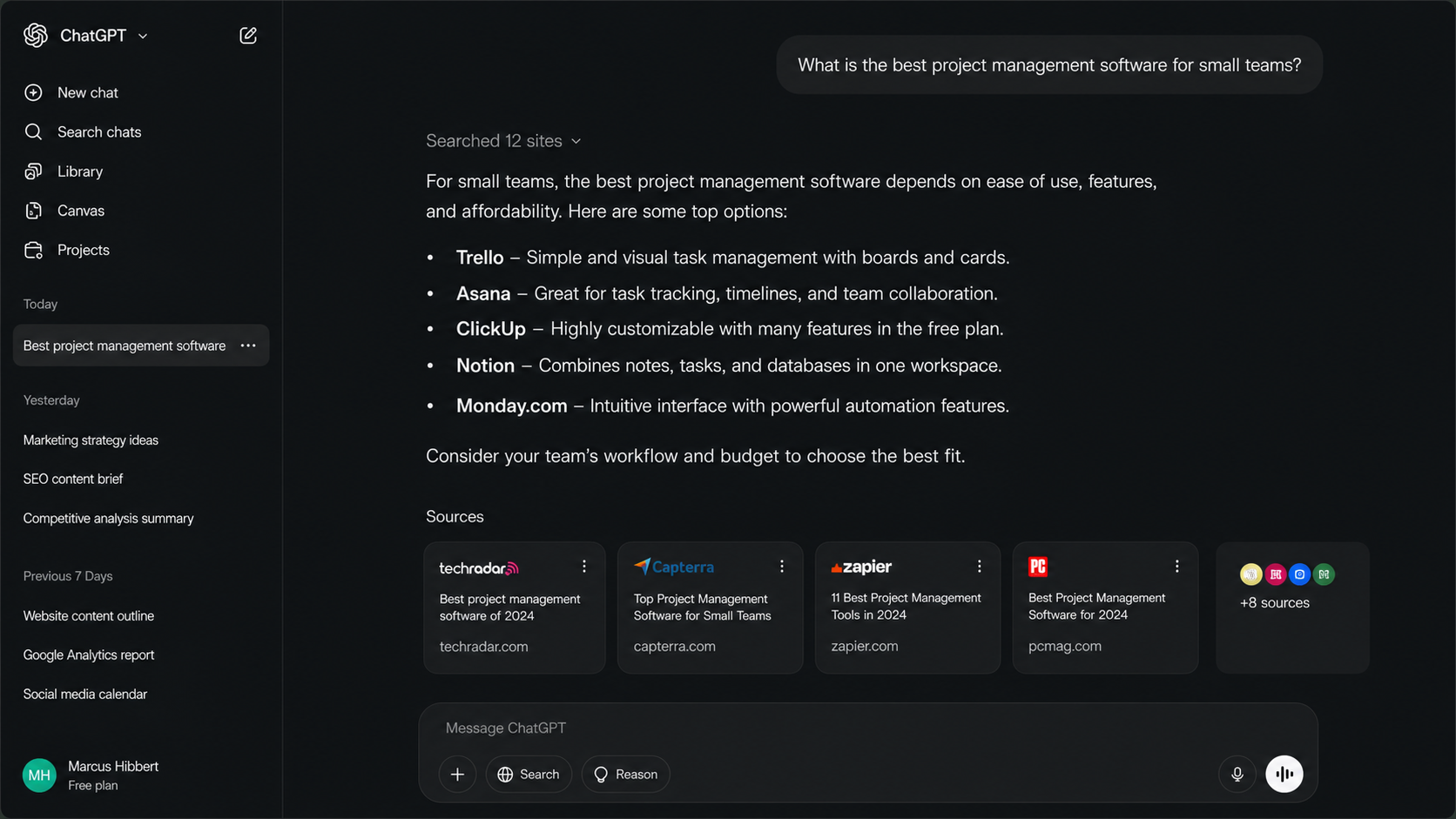
When a buyer types one question into ChatGPT, Gemini, Copilot, or Perplexity, they see one answer. What they do not see is the hidden retrieval process that may have expanded that prompt into several related searches before the final response was written.
Most AI search engines analyse the original prompt, infer what else the user probably needs to know, create multiple sub-queries, retrieve evidence for those sub-queries in parallel, and combine the strongest passages into one synthesised answer.
Query fan-out is the hidden process that turns one buyer question into multiple related searches. Your brand’s visibility therefore depends on how well its content cluster answers the full question set—not only the original keyword.
This matters because a pricing question may also trigger searches about ROI, alternatives, customer reviews, implementation, contract terms, current-year information, and the credibility of the company behind the answer.
What Is Query Fan-Out in AI Search?
Direct answer: Query fan-out is the process by which an AI search system decomposes a single user prompt into several related sub-queries, retrieves information for each one in parallel, and synthesises those results into a single answer.
Traditional search generally matched a query against an index and returned a ranked list. Generative search performs a broader retrieval task. It tries to understand the user’s real objective, generates query variants for implied questions, finds supporting evidence, evaluates candidate passages, and then builds an answer from the strongest material.
Google officially describes query fan-out as issuing multiple related searches across subtopics and data sources. Review Google Search Central’s AI features guidance and its generative AI optimization guide. This cluster also supports the Generative Engine Optimisation pillar.
Industry explanations include iPullRank’s query fan-out chapter, Semrush’s query fan-out guide, Ahrefs’ query fan-out guide, and Neil Patel’s AI SEO guide.
Google patent US11663201B2 describes a closely related system that creates multiple query variants from a single search query. Practitioners generally refer to this behaviour as query fan-out.
Traditional Search vs Query Fan-Out Search
Query fan-out changes both the retrieval process and the type of content most likely to survive it. Traditional SEO often focused on matching one page to one primary query. AI search frequently evaluates an entire set of related intents.
For the mechanics behind that change, compare iPullRank’s query expansion analysis, Semrush’s fan-out experiment, Ahrefs’ AI search explanation, and Neil Patel’s semantic search guide.
| Dimension | Traditional Search | AI Search with Fan-Out |
|---|---|---|
| Input | One search query | One prompt expanded into several hidden sub-queries |
| Retrieval | Mostly one ranked results set | Parallel retrieval across several question types |
| Best content model | One strongly targeted page | A structured and interconnected topic cluster |
| Primary success signal | Ranking position and clicks | Coverage, extractability, trust, freshness, and citation readiness |
| Main weakness | Incorrect keyword targeting | Missing hidden sub-intents |
Input Model
Best Content Model
Visibility Driver
The Eight Sub-Query Types AI Search Generates
In practice, fan-out searches tend to fall into recurring intent groups. Each group requires a different type of page, passage, or proof signal.
Why Most Fan-Out Sub-Queries Are Invisible to Keyword Research
Many fan-out searches are too specific and contextual to register meaningful search volume in traditional tools. A broad prompt such as “best project management software” may generate hidden searches about remote engineering teams, Jira migration, team size, onboarding time, pricing, and security.
Those exact phrases may never appear in Ahrefs, Semrush, or Google Keyword Planner. They still influence which pages the AI retrieves and which brands appear in the final response.
Keyword research tells you what people type into a search box. Query fan-out research reveals what AI systems search on their behalf.
AI Recommended fan-out principle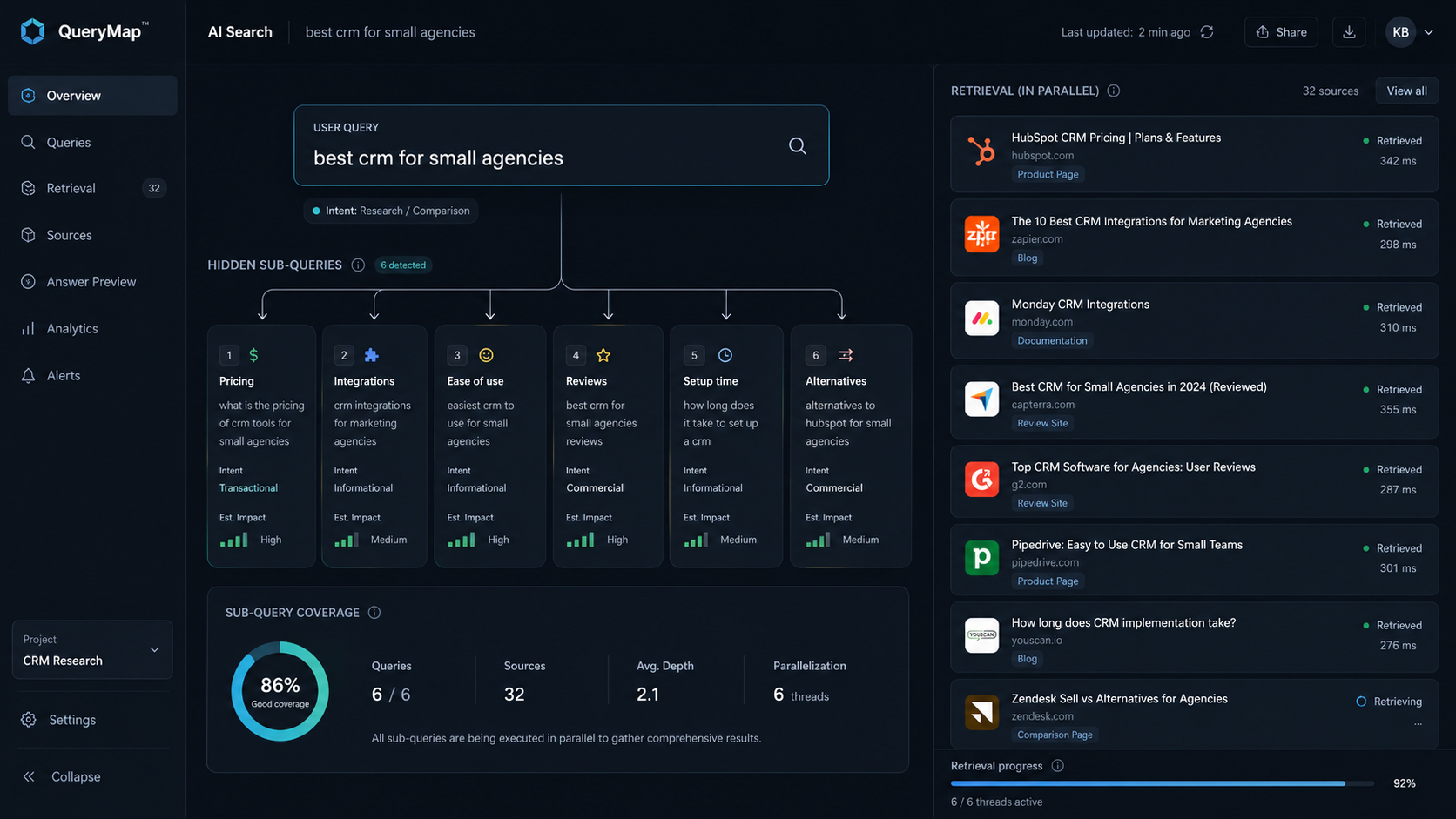
The practical implication is that content calendars built only from high-volume keywords are incomplete. Strong AI visibility requires topic-depth content that answers the logical follow-up questions buyers—and AI systems—will ask.
For research workflows, use iPullRank’s fan-out content-planning guide, Semrush’s prompt research guide, Ahrefs’ AI Overview research, and Neil Patel’s current keyword research framework.
For Google-specific quality checks, use the official helpful, reliable, people-first content guidance and the Search Central guidance for succeeding in AI search.
How Different AI Platforms Handle Fan-Out
Query fan-out is not implemented identically across every platform. ChatGPT, Gemini, Perplexity, and Copilot may expand the same prompt differently, favour different modifiers, and retrieve from different source pools.
Platform-specific testing therefore matters. One system may emphasise current information and comparisons, while another may place more weight on reviews, technical documentation, or established entity authority.
Platform variation is covered in iPullRank’s personalised fan-out research, Semrush’s prompt-tracking guide, Ahrefs’ fan-out tracking documentation, and Neil Patel’s generative-search analysis.
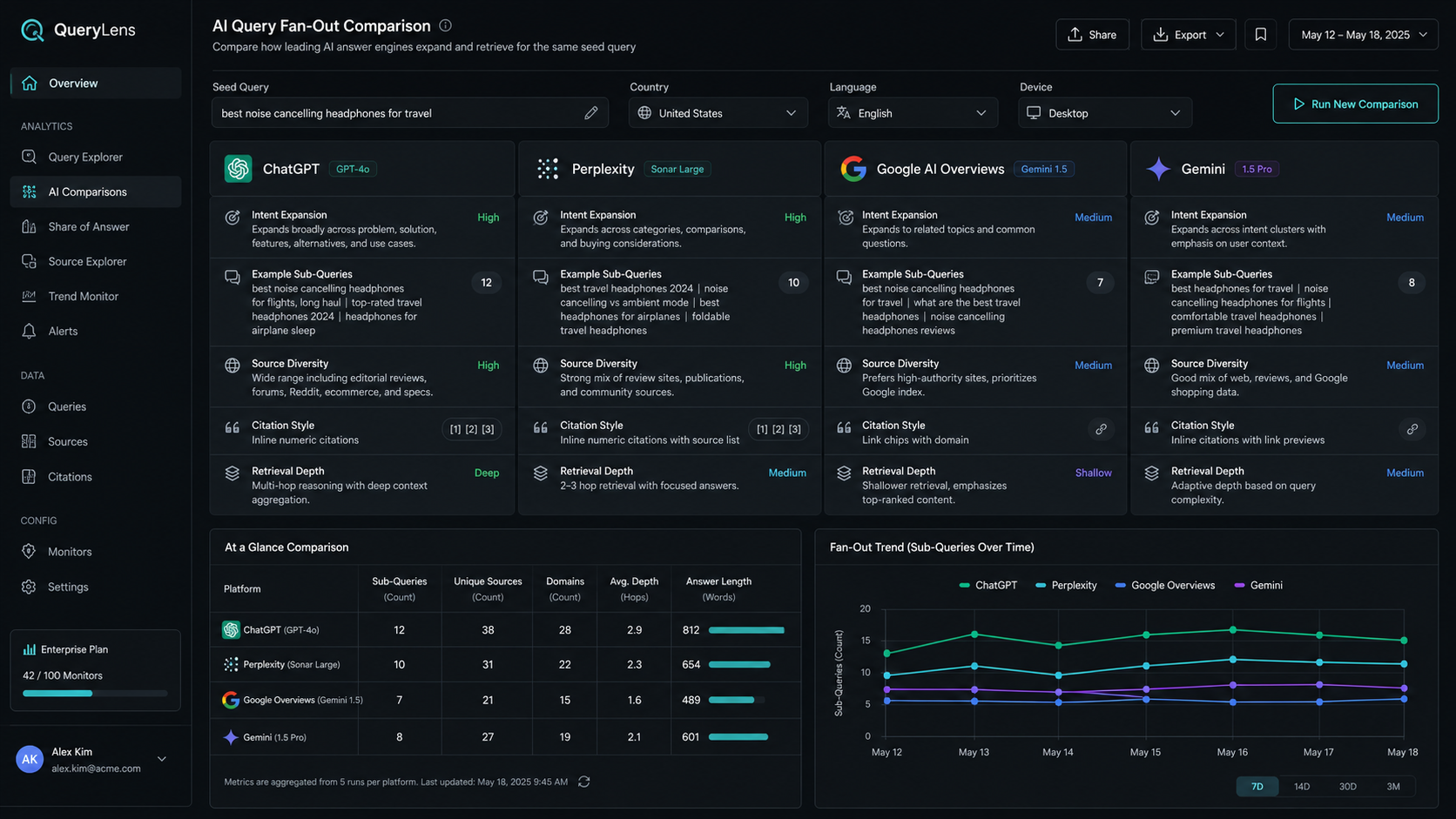
Modifiers such as best, top, reviews, alternatives, and the current year frequently appear during query expansion. Content should include these ideas naturally where they genuinely help the reader.
What Content Survives Query Fan-Out?
Fan-out changes the successful content unit from one optimised page to one well-covered topic cluster. A single article may address two or three sub-query types. A connected cluster can address all eight.
For the retrieval layer behind this process, see Google Cloud’s retrieval-augmented generation overview and its generative AI glossary on embeddings and semantic retrieval.
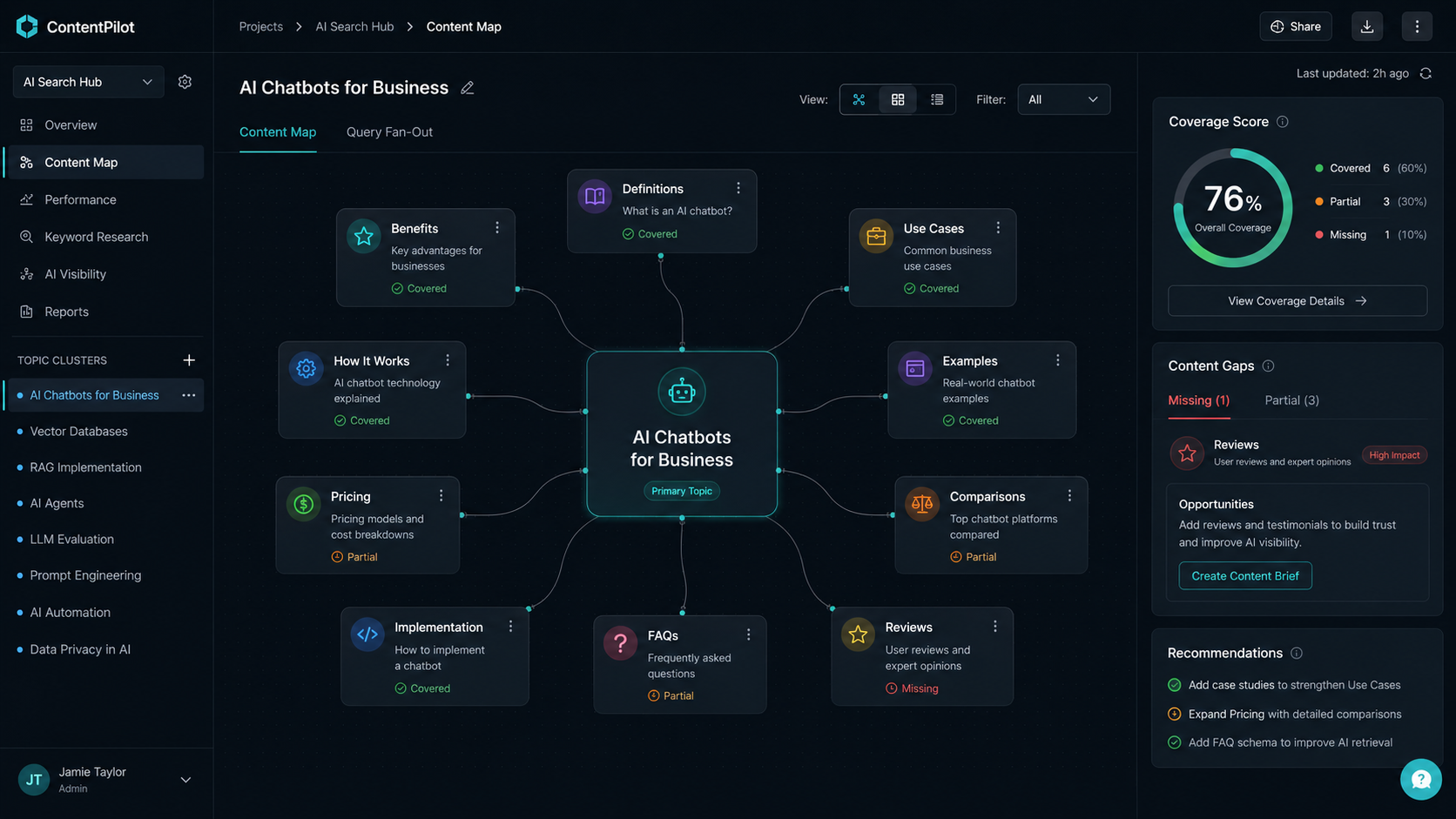
Start each section with its answer
AI retrieval systems need passages that can stand on their own. The direct answer should appear in the first one or two sentences, followed by context, evidence, examples, and internal links.
Include natural comparison language
Fan-out frequently introduces comparison modifiers. Honest comparison tables, named alternatives, practical use cases, and clear “best for” explanations increase the number of retrieval variants a page can match.
Maintain visible freshness signals
Current-year modifiers are common. Display a genuine last-updated date, refresh examples and statistics, and keep Article schema’s dateModified value aligned with the visible page date.
Build a verifiable entity layer
Named authors, author pages, LinkedIn profiles, Person schema, Organisation schema, and consistent brand details help answer the hidden question: “Who is behind this information, and should the system trust them?”
Fan-Out Coverage Checklist
Why Most Content Fails Query Fan-Out
Most content fails not because it is badly written, but because it was created for a one-query, one-page search model.
It targets one keyword
One page built around one keyword commonly covers only one or two sub-intents. Fan-out visibility requires broader cluster-level coverage.
It buries the direct answer
A competitor whose answer appears in sentence one may be easier to extract than a page that hides the same answer in paragraph four.
It ignores comparisons, reviews, and commercial questions
AI systems often generate evaluative sub-queries even when the original buyer prompt does not explicitly ask for a comparison.
It has no freshness signals
A page with no visible update date and outdated examples is less likely to match time-sensitive and current-year sub-queries.
It has no entity layer
Without an identifiable author, author page, company information, or structured entity data, the model has less evidence supporting trust.
Step-by-Step Fan-Out Optimisation Strategy
Fan-out optimisation should be treated as a continuous cycle. Teams need to map likely sub-queries, evaluate current coverage, fill gaps, strengthen trust, keep content fresh, and measure visibility repeatedly.
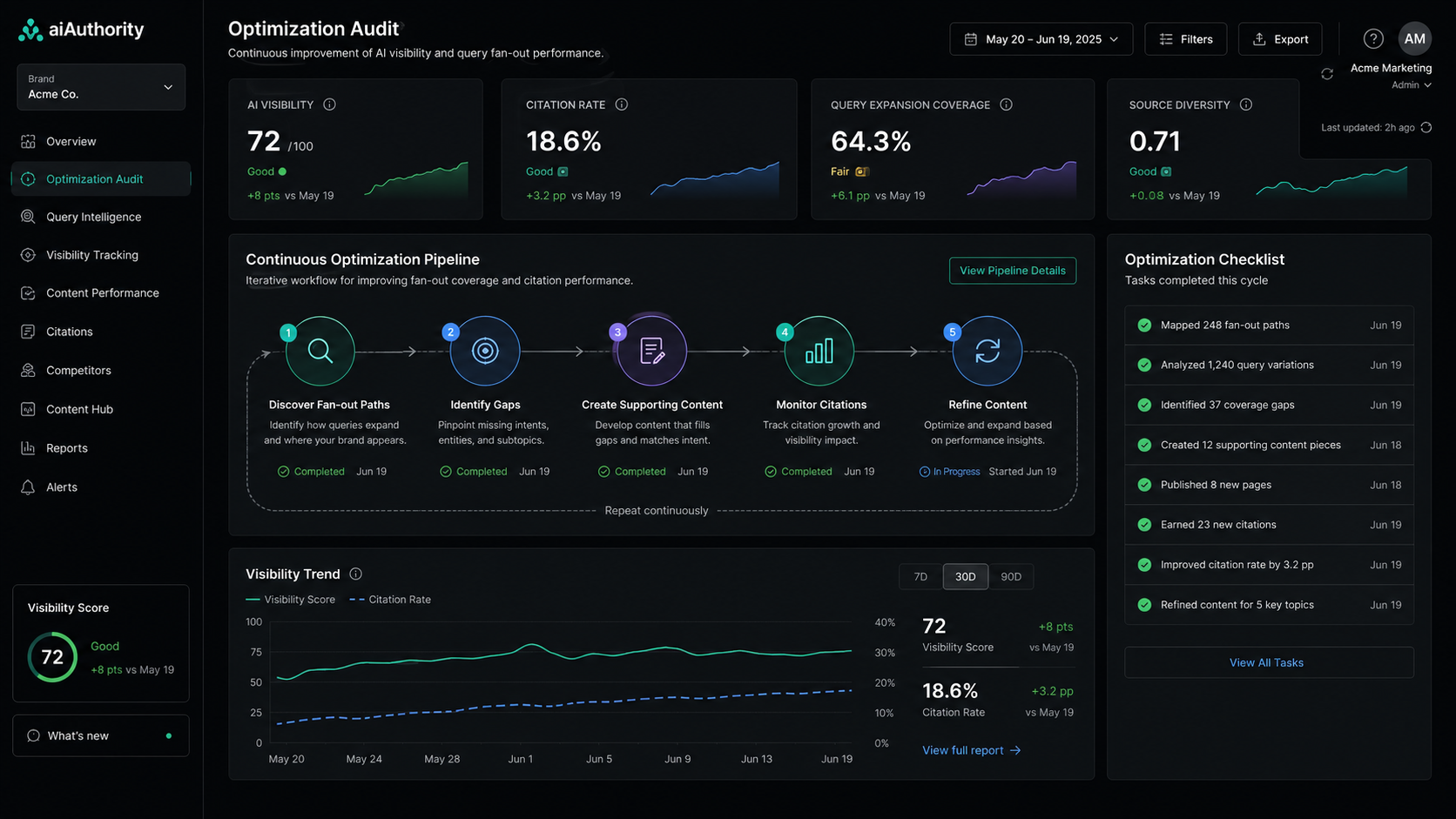
Map the sub-query landscape
Start with the buyer’s highest-intent questions. For each one, list likely definitional, comparative, pricing, review, procedural, recency, entity, and audience-context variants.
Audit existing coverage
Identify which pages already answer each sub-query type, whether the answer appears near the beginning, and whether AI retrieval systems can crawl it.
Fill the content-cluster gaps
Create or restructure pages for missing intents. Prioritise definitions and comparisons first, followed by pricing, reviews, implementation, and context.
Build the entity layer
Add author attribution, a credible author profile, LinkedIn references, Person schema, and consistent Organisation schema across the site.
Add freshness signals
Update timestamps, current-year statistics, practical examples, and dateModified values so the cluster remains eligible for recency-focused searches.
Measure fan-out coverage monthly
Test the same buyer prompts across major AI platforms and record sub-query patterns, cited sources, competitor visibility, and brand appearance.
How to Measure Fan-Out Coverage
Fan-out coverage is different from a simple citation count. Your brand may appear in an answer without covering the sub-query that mattered most to the buyer. Measurement should therefore be intent-specific.
Run a consistent set of 15–25 buyer prompts every month in ChatGPT, Perplexity, Gemini, and Copilot. Record which intents the answer addresses, which sources it cites, and whether your brand appears in retrieval areas your cluster is designed to cover.
For Google visibility measurement, use the dedicated generative AI performance views documented in Google Search Console’s generative AI performance reporting guidance.
For additional measurement context, see iPullRank’s AI Search quick-start guide, Semrush’s fan-out measurement guidance, Ahrefs’ citation study, and Neil Patel’s AEO guide.
| Metric | What It Measures | How to Track It |
|---|---|---|
| Sub-query coverage | Which hidden intent types your cluster answers | Map each page to the eight common fan-out categories |
| Brand appearance rate | How often your brand enters the final answer | Track mentions, citations, links, and recommendations |
| Competitor retrieval pattern | Who repeatedly wins the threads you are missing | Record recurring competitor URLs and source types |
| Freshness performance | Whether updates improve current-year visibility | Test prompts with year and recency modifiers |
| Platform variance | How differently engines interpret the same prompt | Compare identical prompts across multiple platforms |
Sub-Query Coverage
Brand Appearance Rate
Platform Variance
Key Takeaway
- One buyer prompt can silently generate multiple related searches.
- Many important sub-queries never appear in conventional keyword tools.
- A connected topic cluster performs better than one isolated page.
- Direct answers, freshness, comparisons, proof, and entity clarity all matter.
- Fan-out performance must be tested repeatedly across several AI platforms.
Frequently Asked Questions
What is query fan-out in simple terms?
Why does query fan-out matter for SEO and GEO?
Can one comprehensive page cover every fan-out query?
How can I discover likely hidden sub-queries?
How often should fan-out coverage be measured?

About the Author
Marcus Hibbert is the founder of AI Recommended, a leading Generative Engine Optimisation (GEO) agency helping UK B2B technology companies become the trusted recommendation across ChatGPT, Google AI Mode, AI Overviews, Gemini, Claude, Perplexity and Microsoft Copilot whenever decision-makers search for products, services and solutions.
Connect with Marcus on LinkedIn.
Request a GEO Audit
Discover how AI platforms describe, cite and recommend your brand across the prompts your ideal buyers use—and uncover opportunities to become AI's trusted recommendation.
By submitting this form, you’re requesting a Generative Engine Optimization (GEO) audit for your brand.

.png)